12 September 2026
The Half Hour After Sunset on Madeira
Blue hour on the north coast: why the best light comes after the sun goes, what a slow shutter does to it, and how to book a session that reaches it.
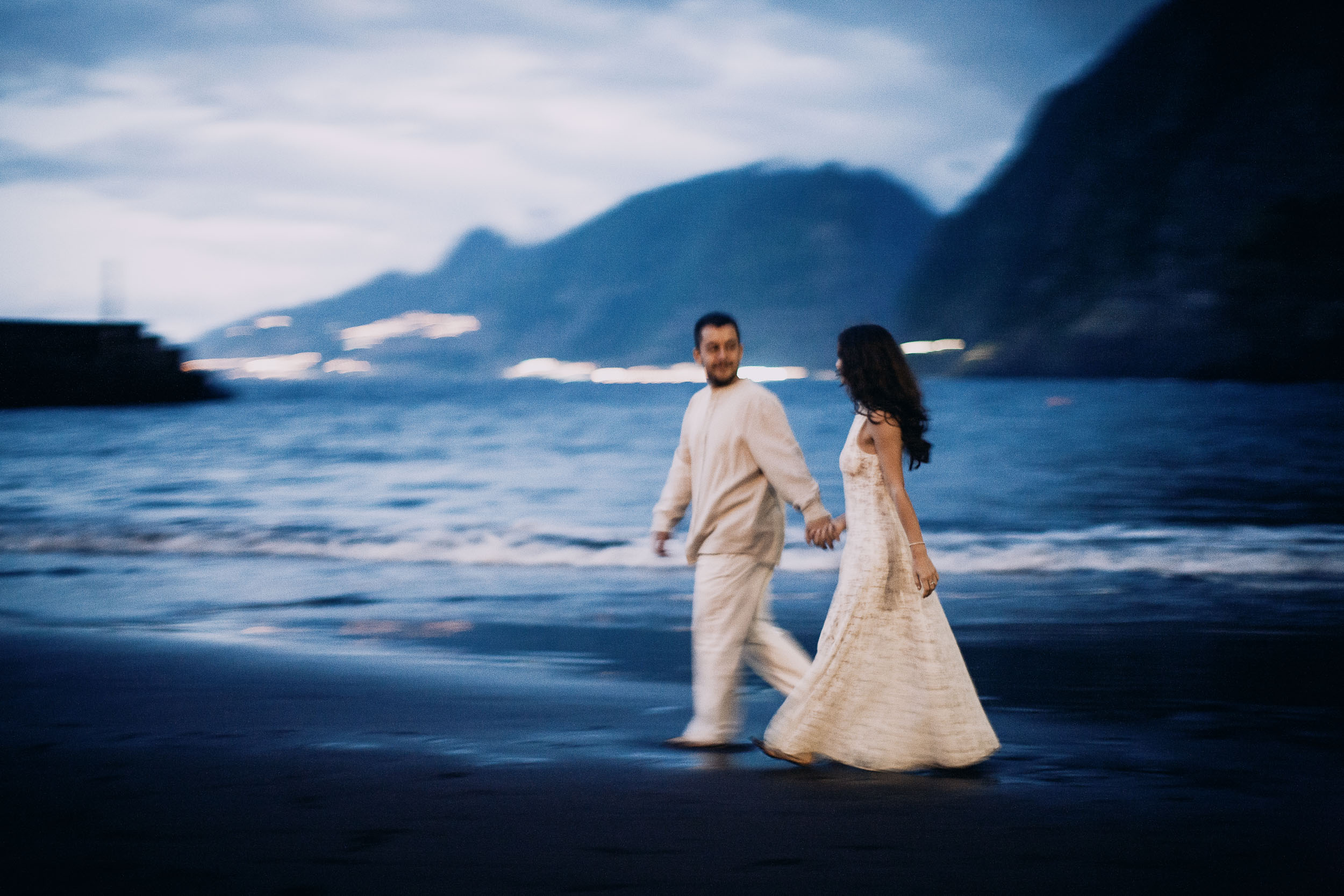
Almost everyone packs up when the sun touches the horizon. I understand why. The word sunset is in every booking message I get, and once the sun is gone the day feels finished.
The thirty minutes after sunset are the part of the evening I would keep if I could only keep one.
What actually happens in that half hour
The sun drops below the water and the light stops coming from one direction. Instead the whole sky becomes the light source. Shadows disappear. Faces get lit evenly from above and from the sides at once, and skin stops having a bright half and a dark half.
At the same time the sky turns a blue that a camera records more strongly than an eye does. On the north coast the cliffs go almost black against it. The lights of the coast road come on in a line across the bay.
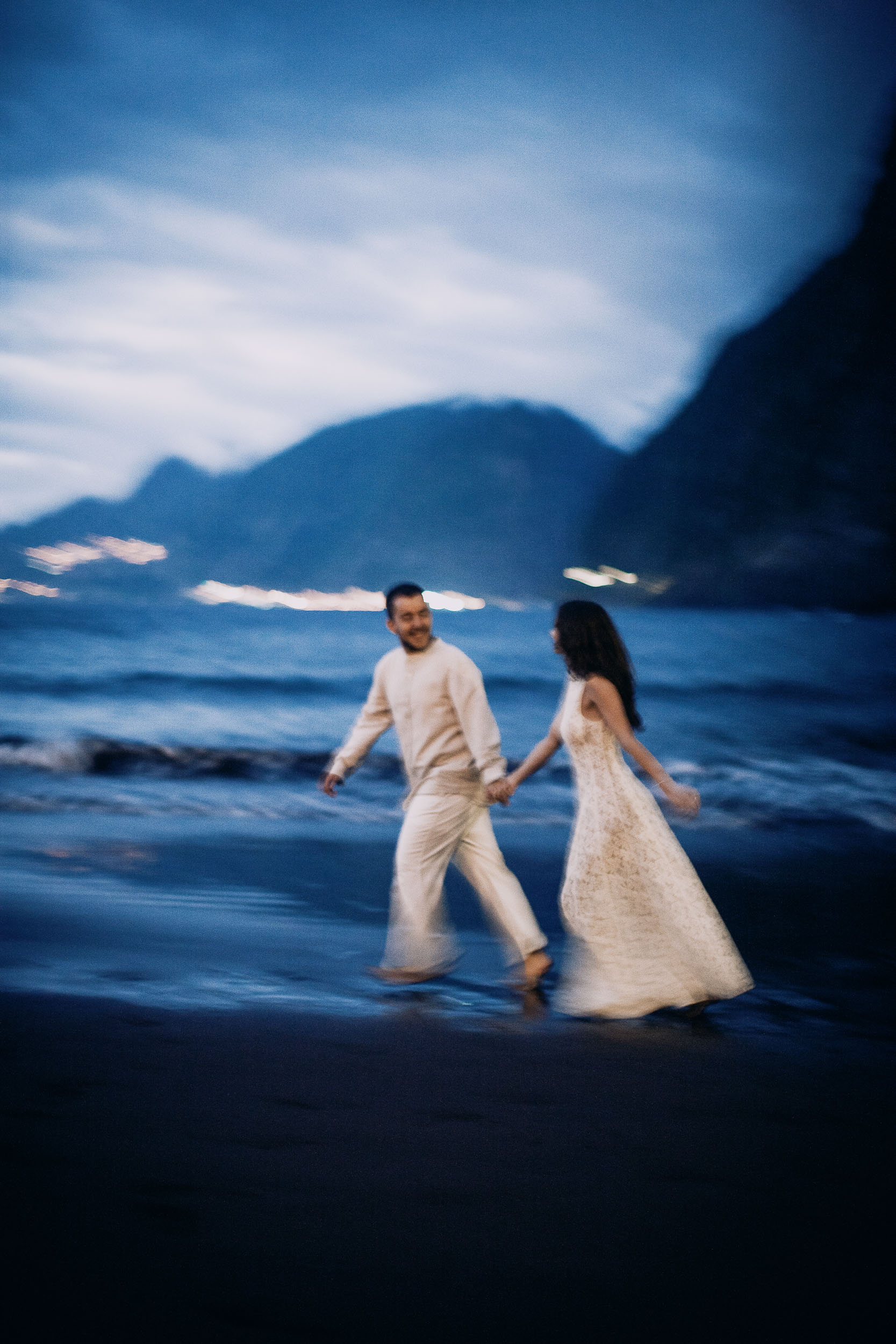
There is one complication. There is not much light left, so the shutter has to stay open longer. A longer shutter records movement. You cannot have both the blue and a frozen frame.
Slow shutter and movement
The usual answer is to raise the sensitivity until the frame freezes, which buys you a noisy photograph of two people standing still in the dark. I would rather use the other answer.
I ask people to run.
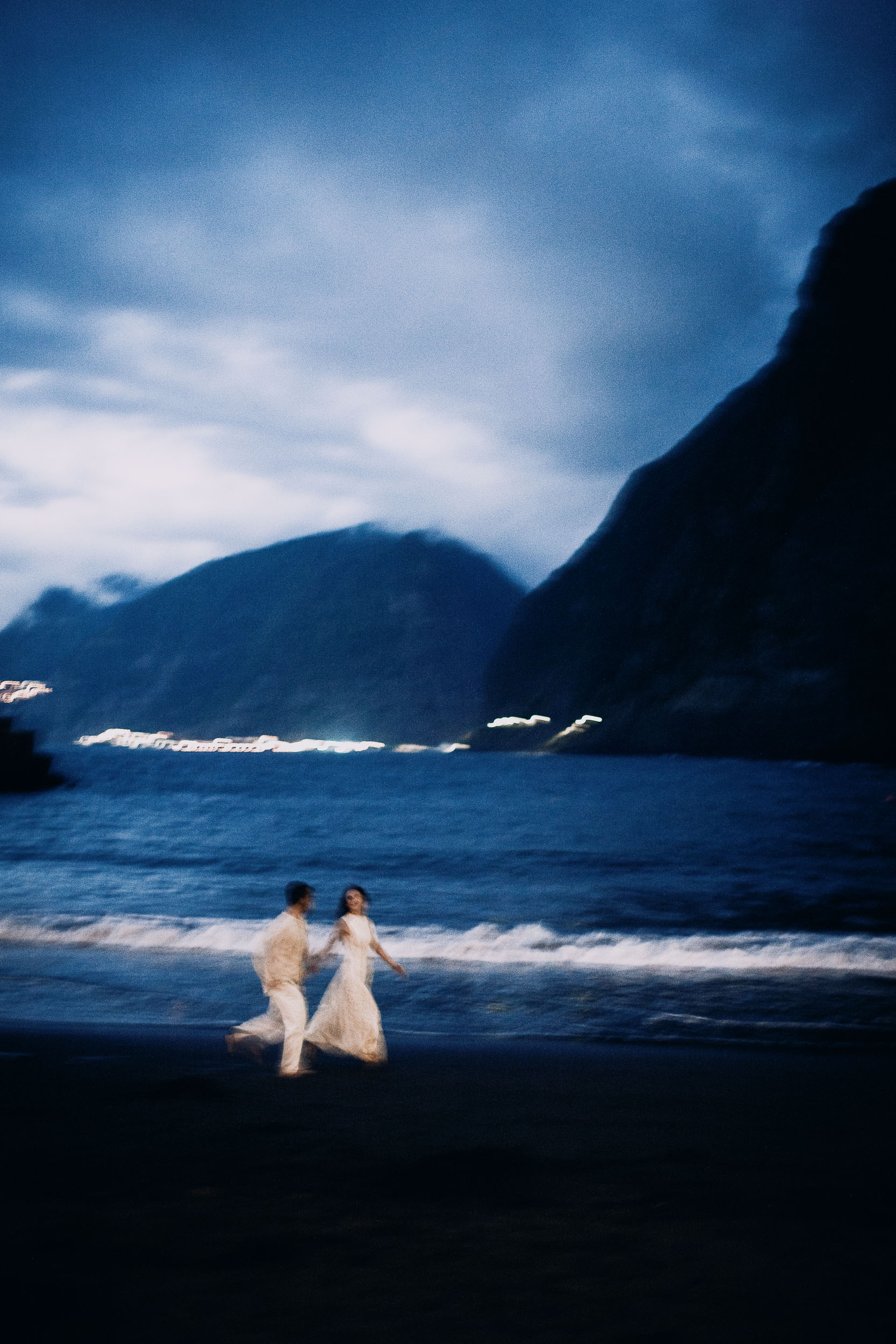
What comes back is not sharp. Two pale shapes crossing black sand. The surf pulled into one smooth band, the village lights stretched into streaks. The couple stays recognisable, and the motion is visible in the same frame.
It cannot be staged later, because the effect comes from real movement at a real shutter speed.
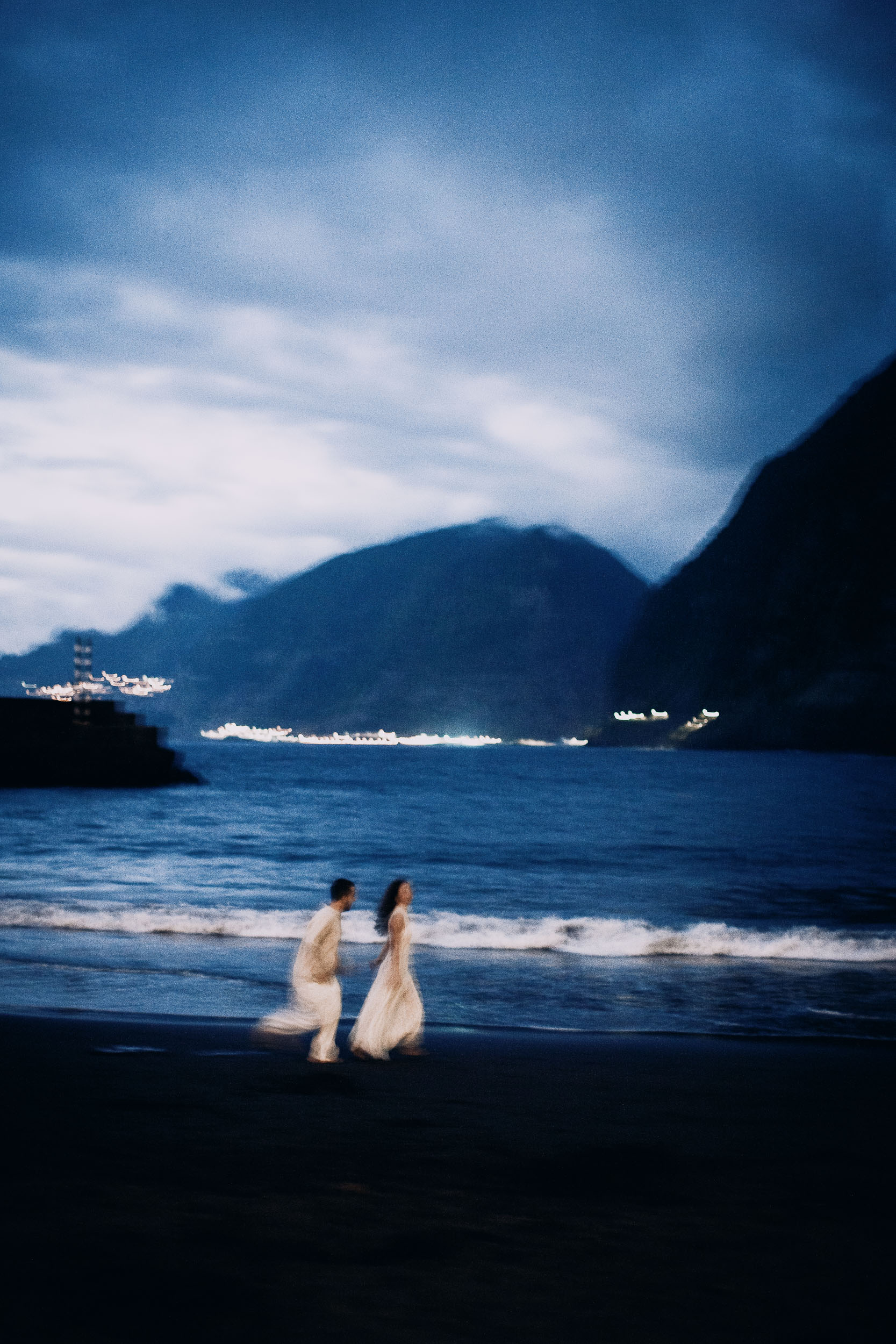
Not every frame in that window is blurred. Standing still for two seconds gives a clean photograph with the same blue behind it. The blur is a choice.
Where it works on this island
It needs three things: water, something dark and tall behind it, and lights in the distance. Seixal has all three. Black sand, two hundred metres of cliff over the beach, and a village across the bay.
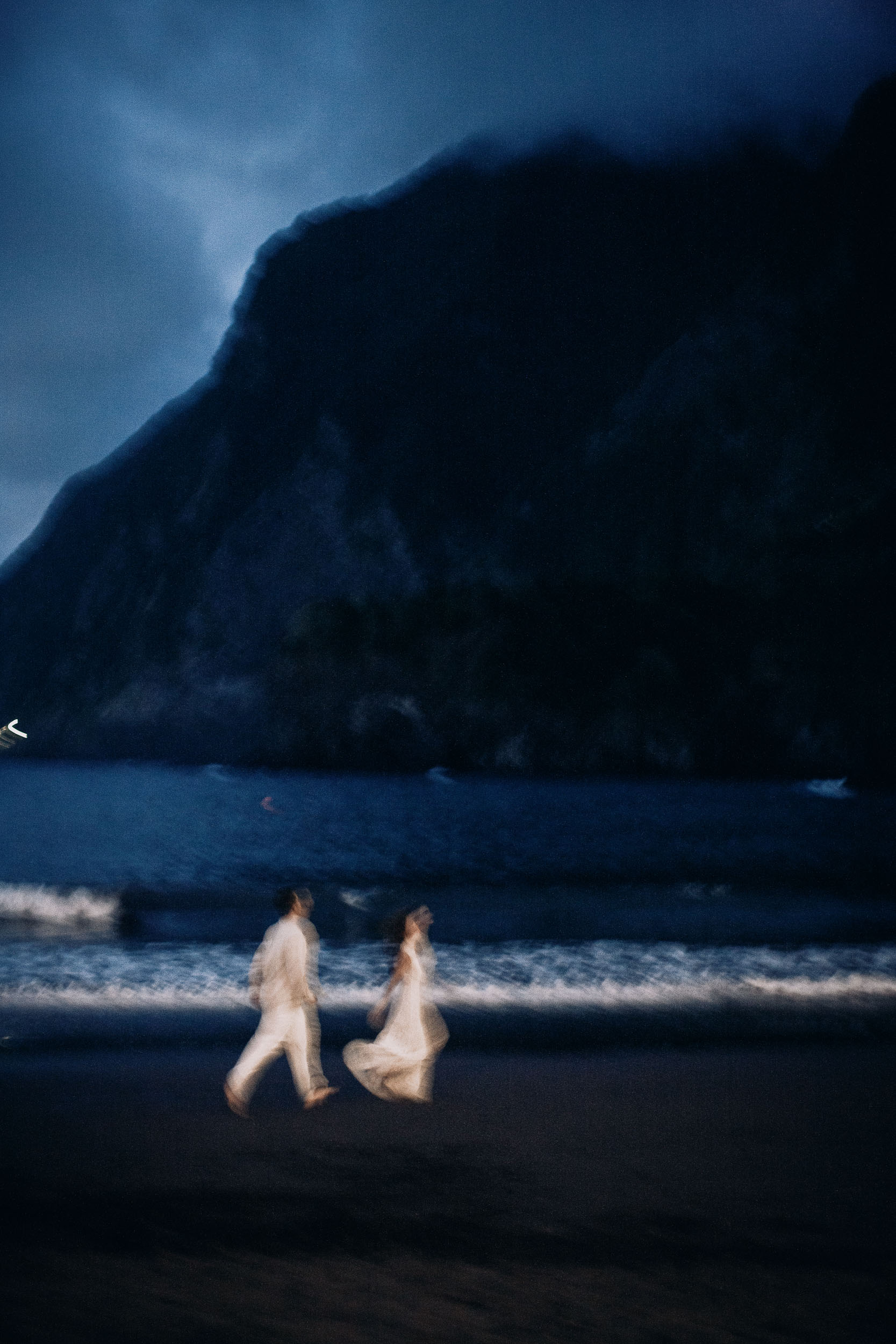
The practical notes for the place, including the drive and the parking, are on the Seixal Beach page. Praia Formosa works for the same window and is ten minutes from Funchal instead of fifty.
Session length and sunset
If sunset is at 20:33 and your session is one hour, you either start at 19:35 and stop at the moment the light gets good, or you start at 20:05 and lose the golden light before it.
One hour does not hold both. Two hours does.
That is the reason I point couples at the longer options. The scope and the prices are on the couples and proposal page. If you are still choosing which month to come, the month by month breakdown matters more than which location you pick, because the clock moves by about four hours across the year here.
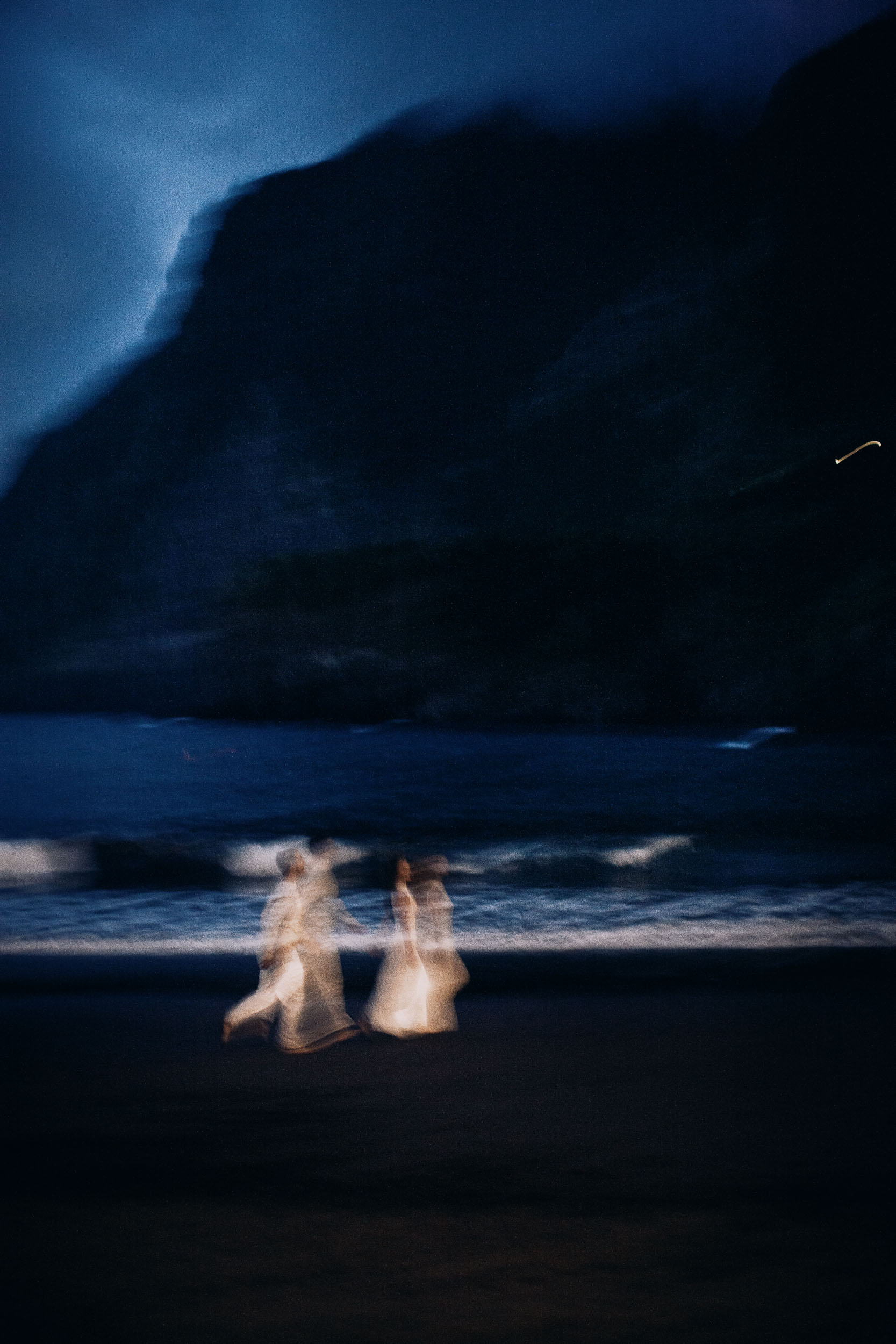
Two more practical things. Bring something you do not mind getting wet, because the good frames are at the waterline and the waterline moves. And expect to be cold: the north coast after dark is windier than the same hour in Funchal.
The set these frames come from was shot on 2 September 2026 and runs from afternoon fog in the laurel forest to full dark on the beach: Edin & Arita at Fanal Forest and Seixal Beach.